
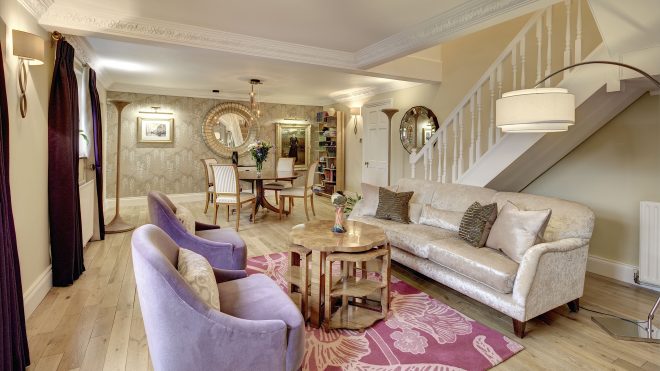
Design trends for Residential and Hospitality industry in The Corona Era.
Over the past few years there has been more crossovers, between residential and hospitality interiors, than ever before.
With fashion designers being brought in on projects to oversee or set design themes, celebrity chefs cooking in restaurants and the likes of David Collins starting to create spaces which are viewed as more than just spaces, it’s no wonder that the residential and hospitality designers can now transition between residential and commercial projects at greater ease.
Similarities between trends in projects include “sumptuousness of spaces, luxuriousness of materials and depth of colour,” explains Emile http://www.chameleondesignsinteriors.co.uk, “wellness is high on the agenda and a number of current residential clients have home gyms or want to build dedicated spaces into their schemes.”
Since the start of 2020 there has been a significant shift in consciousness surrounding hygiene as well as physical and mental well-being, with the majority of the world having experienced months of lockdown, restricted social lives and restricted access to work, it’s no wonder that certain trends in health and wellness have started to sprout:
Design Predictions
“Nowadays we are rethinking and reimagining our life habits towards a more sustainable world, and it’s becoming a rule rather than an option,” asserts Emile, “For many years, hoteliers have been looking to differentiate and personalise their institutions and we believe this trend will continue going forward, relating the project to its narratives and creating culturally enriching experiences for its visitors.”
In a world where nothing is currently certain and the hospitality industry has taken much of the ire in the breakout of Covid-19, the importance of hygiene in public spaces – which can rely on the extent of the finishes used, surfaces requiring to be touched and the space required – there will undoubtedly be more emphasis placed on the possibility to repurpose and rearrange areas, allowing for multi-functional and quickly adaptable spaces which can provide more financial flexibility for the operator.
“At this stage, we think many of the spaces might explore multi-usage of their facilities, opening to new local customers for working, sport et cetera rather than just for the overnight experience,” predicts Emile, “the use of touch less technologies will grow and additional outdoor or well ventilated space will be introduced.”
The changes to hospitality
“Slouchy seating, ambient lighting, cosy and womb-like spaces… Corona has heightened the need for all of these, even though they were already beginning to feature on wish lists. People want to connect with each other in a personal way, so whilst technology is fantastic to make life easier, I also see that there is a need to un-hook and get into nature more,” adds Emile What is the link between wellbeing and Interior Design, a fan of biophilic design – a concept believed to increase occupant connectivity to the natural environment through the use of direct nature, indirect nature, as well as space and place conditions.
“Creating spaces that have a clear identity from the outset – nurturing and promoting human connections, mental wellbeing, bodily wellbeing and so on both in a residential and hospitality setting. http://www.chameleondesignsinteriors.co.uk