
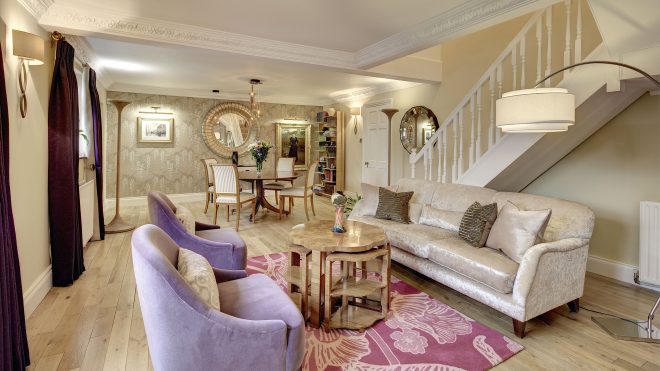
From Anglepoise to LED”S here are top tips for lighting your home.
Feeling put upon or stressed, experiencing irritability and non-specific testiness? Not just at what is happening round us, but it could also be down to poor lighting. Badly positioned wall washers, dim reading lamps, over island kitchen lights that bash your head, pendants as bright as a stadium lights, all these can contribute to your unease.
An infuriating aspects of creating a lighting scheme is that often for many homeowners/hospitality industries, is that it is impossible to tell, before moving into a property and living in rooms or spaces, what will suit, yet the placement of wired in lighting must be one of the first decisions of a project. This is where an interior designer comes in and can design a lighting scheme to fit your needs. We at www.chameleondesignsinteriors.co.uk are experienced at designing lighting schemes.
Our lighting needs to change as we alter the ay we use our interiors, where we perform daily tasks or settle down to rest, and, of course with the seasons. A good lighting scheme designed at the outset of a project will factor in these changes.
Add to this mix that we are entering an energy crisis and must par back power usage and it’s time to overhaul lighting set-ups.
Lets start with with an easy win
Lets start with an easy win. If you are concerned about the climate crisis and looming rise in energy bills, then changes to LED’s. The energy needed for powering a two-watt LED lamp produces less CO2 than that emitted from a burning candle (pooky.com)
In English? Lumens have taken over from watts as the way to figure out which bulb is suited toy your space- the higher the number, the brighter the bulb will be. But a very important secondary measure is ‘kelvins’, as this will show how natural the glow will be. The higher the kelvins, the colder/bluer the light the lower the more orange. We as designers tend to favour 2,700 – warm white in our specification as this gives a good combination of gentle cosy light and a decent output of lumens.
Some easy options…
Wall washers and scones are often the most useful; flexible forms of lighting, but often needs to be wired in. But try, plug in lights. A lot of high street brands now offer this an option, but one of my personal favourite’s is David Hunt lighting, hand made in the Cotswold’s, a win/win in terms of reducing transportation miles, but this also allows flexibility to adapt their designs. They can adapt most of their wall lights with a plugged cable.
As an interior designer, we work to the principal that “lighting is as much about controlling natural light as using electrical lighting. See what you can illuminate naturally first, before layering with additional floor, ceiling and sidelights.
Designer trick- Layering
That brings me onto layering your lighting and often this has to be considered in three layers, especially for living rooms and bedrooms.
The first layer is fixed lighting, which is brighter and more powerful. Use ceiling lights and wall lights in spaces where you need access to the most light.
The second layer of lighting is accent lighting for the dusk and evening periods. Layer number two includes floor lamps beside armchairs, which double as reading lamps, and “wall lamps” by your bedside to give access to good light for night time reading, but also flexible to not keep you or partner awake.
My third layer consists of lamps that “add mood and imbue cosy interiors. Use mini table lamps on coffee tables and shelves”.
In kitchens and home offices schemes, a layer of task lighting is required. Dark spots especially in prep areas of a kitchen are both irksome but can also be dangerous.
Most of us are not working with a blank canvas, and what most people want to know is can lighting help our interiors to fulfill our post pandemic hybrid roles. Can it make rooms we have worked in during the day feel cocooning and calming after dark? Often the answer is changing your existing fittings, installing dimmers, and/or dimmable bulbs, (an hours electricians time be worth its weight in gold), or how about using portable LED’s, charged by USB. Another clever way to reclaim a dark corner is with an articulated lighting. Standard, wall or desk lamps with adjustable arms can angle light into underused spaces.
What a bright idea.
We at Chameleon Interiors can help, please get in touch www.chameleondesignsinteriors.co.uk